
















Iran discovers ancient crustacean species dating back 200 million years
Rare “living fossil” found in Ardestan highlights the ecological richness of Isfahan Province

A rare species of prehistoric crustacean, believed to have existed for around 200 million years, has been discovered in Ardestan, in Iran’s central Isfahan Province. The finding – a specimen of Triops cancriformis, commonly known as the European tadpole shrimp – was confirmed by the Ardestan Department of Environmental Protection and documented in photographs and video footage.
According to Hassan Shavakhi, head of the Ardestan Environmental Protection Department, the discovery provides “clear evidence of the health and biodiversity of the local ecosystem.” The ancient creature was found in a natural habitat following a period of heavy rainfall.
The Triops cancriformis, part of the branchiopod crustacean family, typically measures between 2 and 11 centimetres in length. Its eggs are uniquely adapted to survive in dry soil for more than two decades, remaining dormant until temporary ponds or reservoirs refill with water – a remarkable evolutionary adaptation that has ensured the species’ survival for millions of years.
Shavakhi described the find as the rediscovery of a “living fossil”, preserving traits almost unchanged since prehistoric times. This makes it of exceptional scientific importance for research into ancient life and environmental evolution. This is reported by Alalam News Network, a partner of TV BRICS.
He added that the presence of such a species in Ardestan underscores the ecological richness and resilience of the region’s semi-arid and mountainous landscapes, which host a diverse range of plant and animal life. The area is now considered one of Isfahan Province’s most important natural habitats.
The Ardestan Environmental Department continues to monitor local ecosystems in partnership with park rangers and nearby communities. Residents have been encouraged to report any sightings of rare species to assist ongoing conservation efforts.
Located around 118 kilometres north of Isfahan, Ardestan is home to over 43,000 people and increasingly recognised as a site of both ecological and scientific significance in central Iran.
Earlier, Agência Brasil reported that a team of scientists from the State University of Rio de Janeiro, working in collaboration with the National Museum of the Federal University of Rio de Janeiro, had discovered a fossil of a fish that lived during the Cretaceous period (between 145 and 66 million years ago).
In addition, Kazinform, a partner of TV BRICS, published a report in September stating that near the village of Baiterek in the North Kazakhstan Region, a local resident found a mammoth tibia measuring over one metre long while fishing. It was noted that the animal is believed to have inhabited the area around 15,000 years ago.
Photo: shironosov / iStock
-
![]()

 Society03.09.26World-renowned international nuclear research centre to present its work on TV BRICS
 -
![]()

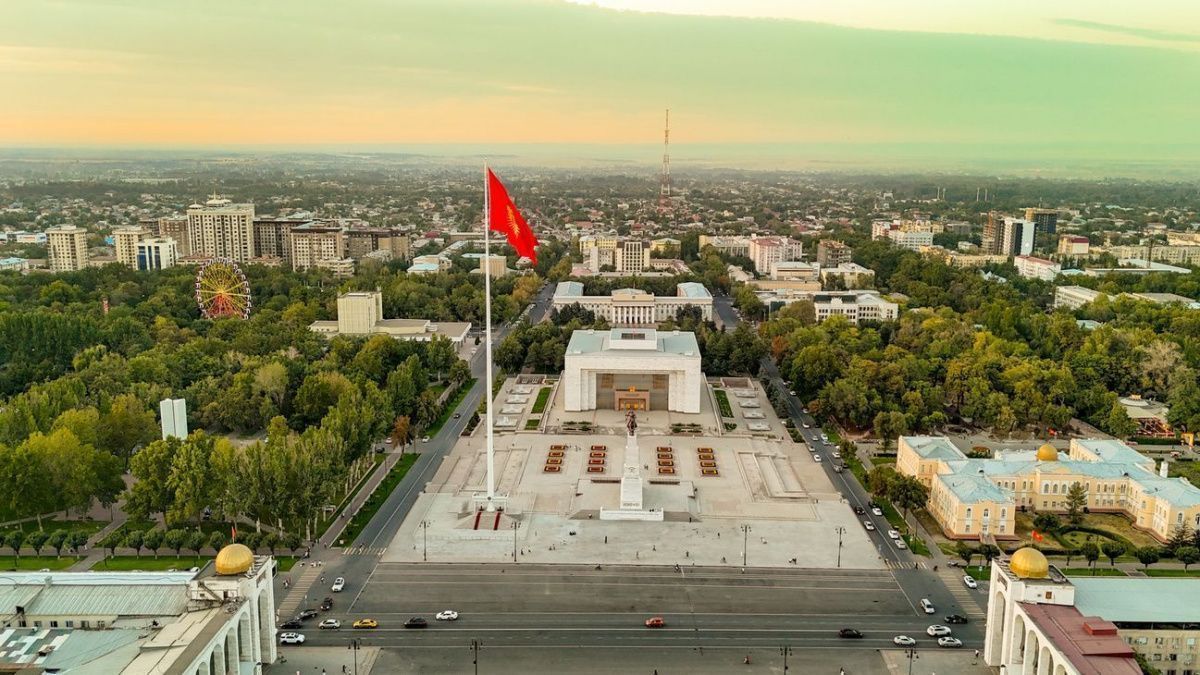
 Society01.09.26SCO leaders sign Bishkek Declaration
 -
![]() Society30.08.26BRICS News Digest for the previous week
Society30.08.26BRICS News Digest for the previous week -
![]()
 Society29.08.26UAE archaeological discoveries shed new light on ancient human history
 -
![]()
 Society28.08.26Vietnam develops silver economy focused on older people
 -
![]()
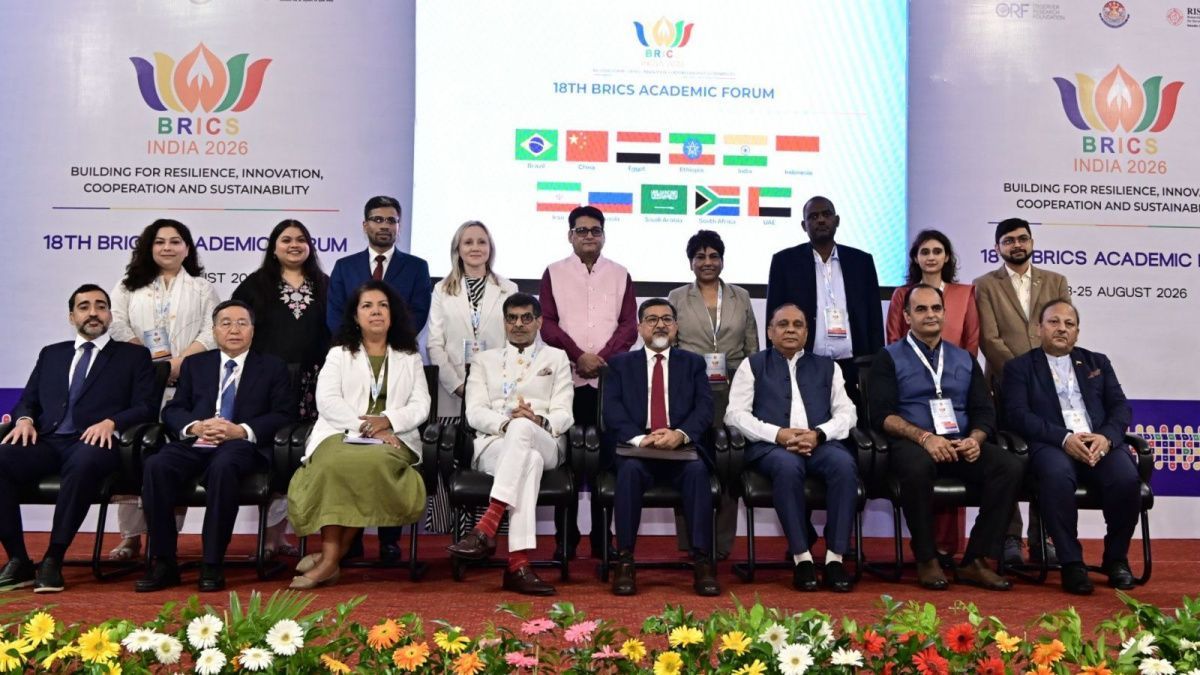
 Society28.08.26BRICS countries adopt Chennai Declaration













-
![Vladimir Putin]()
 Vladimir PutinPresident of Russia"We are developing mutual trade, which is growing; it increased by over 12 per cent last year. We have a joint commission working in this sphere. Our focus is on agriculture, shipbuilding, information technology and energy, including nuclear power. We have signed a free trade agreement between the Eurasian Economic Union and Indonesia. Jakarta is our reliable and old friend within ASEAN. We are working together at all international platforms, including the UN"
 -
![Vladimir Putin]() Vladimir PutinPresident of Russia"More and more Iranian students are choosing Russian education. We are very pleased about this. A great many future doctors are studying in Russia. In the 2025–2026 academic year, the number of Iranian students in Russia approached 10,000, with 802 of them studying at the expense of the Russian state budget"
Vladimir PutinPresident of Russia"More and more Iranian students are choosing Russian education. We are very pleased about this. A great many future doctors are studying in Russia. In the 2025–2026 academic year, the number of Iranian students in Russia approached 10,000, with 802 of them studying at the expense of the Russian state budget" -
![Xi Jinping]() Xi JinpingPresident of the People’s Republic of China"The foundation of our bilateral relations will only grow stronger, and we will confidently move forward to a better future. […] The striving of nations on our planet for peace, development, cooperation and mutual benefit remains unchanged. The vital mission of the Shanghai Cooperation Organisation is to maintain stability and promote the development of our region"
Xi JinpingPresident of the People’s Republic of China"The foundation of our bilateral relations will only grow stronger, and we will confidently move forward to a better future. […] The striving of nations on our planet for peace, development, cooperation and mutual benefit remains unchanged. The vital mission of the Shanghai Cooperation Organisation is to maintain stability and promote the development of our region" -
![Alisher Salomov]() Alisher SalomovAdviser to the Chairman of the National Committee for Ecology and Climate Change of the Republic of Uzbekistan"First and foremost, I would like to highlight the importance of this Central Asia–Russia initiative, because environmental problems know no borders, and only a shared understanding of these problems and the search for joint solutions can deliver positive results"
Alisher SalomovAdviser to the Chairman of the National Committee for Ecology and Climate Change of the Republic of Uzbekistan"First and foremost, I would like to highlight the importance of this Central Asia–Russia initiative, because environmental problems know no borders, and only a shared understanding of these problems and the search for joint solutions can deliver positive results" -
![Joao Paulo Capobianco]() Joao Paulo CapobiancoBrazilian Minister of the Environment and Climate Change"The BRICS countries have a very high level of responsibility because they share an important part of the world's biodiversity, landscapes, populations, food production and water resources. So, we have an opportunity to lead by example. We have our development bank, which can demonstrate and develop new ways of financing programmes. We can reduce the risks for private capital to invest in restoration and efforts to combat desertification"
Joao Paulo CapobiancoBrazilian Minister of the Environment and Climate Change"The BRICS countries have a very high level of responsibility because they share an important part of the world's biodiversity, landscapes, populations, food production and water resources. So, we have an opportunity to lead by example. We have our development bank, which can demonstrate and develop new ways of financing programmes. We can reduce the risks for private capital to invest in restoration and efforts to combat desertification"