















China–Uzbekistan archaeological partnership uncovers Iron Age city-state
Typological analysis and scientific dating confirm that the settlement was established in the 9th century BCE
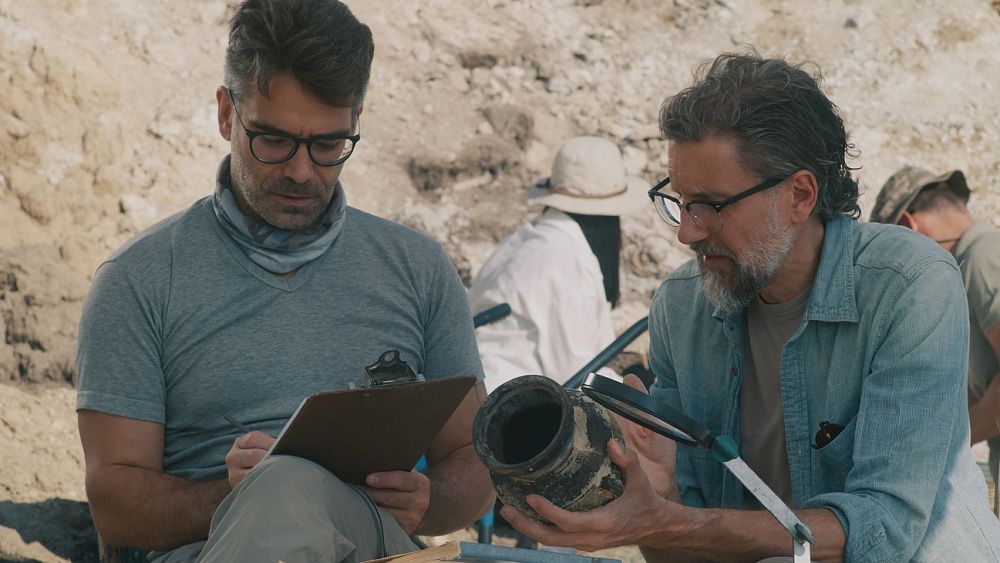
In a new discovery that deepens our understanding of early urban civilisations in Central Asia, Chinese and Uzbek archaeologists have unearthed the remains of an Iron Age city-state in the Surkhandarya River basin in southern Uzbekistan. This is reported by Xinhua News Agency, a partner of TV BRICS.
The results stem from three excavation seasons conducted between 2024 and 2025. The joint team surveyed 47 sites across the Surkhandarya basin and identified the area as a major city-state of ancient Bactria.
Excavations revealed a large, fortified settlement with 7-metre-thick and 2-metre-high mud-brick defensive walls, a substantial interior structure featuring two square earthen columns, a clay platform in one corner, and a carefully constructed stone door socket beneath the threshold.
Numerous artefacts were recovered, including domestic pottery, grinding stones, and agricultural tools, along with bronze arrowheads and blades, offering a rich material record of daily life, trade, and craftsmanship during the early Iron Age.
Typological analysis and scientific dating of ceramic fragments confirm that the settlement was established in the 9th century BCE and abandoned in the 6th century BCE.
Experts believe that these findings are critical for reconstructing the urban layout, architectural style, and socio-economic structure of Iron Age city-states in southern Central Asia, filling a key gap in the region’s historical chronology.
Photo: iStock
-
![]()
 Society27.09.26BRICS News Digest for the previous week
 -
![]()
 Society24.09.26Brazil creates national biobank network
 -
![]()
 Society22.09.26Kazakhstani citizens plant more than 38,000 trees and shrubs during environmental campaign
 -
![]()
 Society21.09.26Iran ranks among global leaders in vaccination and infertility treatment
 -
![]()
 Society21.09.26Admasu Damtew, Ethiopia’s Media Manager: "Future of journalism lies in partnerships that transcend national borders"
 -
![]() Society20.09.26BRICS News Digest for the previous week
Society20.09.26BRICS News Digest for the previous week
























-
![Evgeny Solntsev]()
 Evgeny SolntsevGovernor of Orenburg Region (Russia)"We see growth year after year. Last year, the figure increased by 11.6 per cent. The total share of our products on the sales market is around 24.7 per cent. BRICS countries account for a quarter of all our products. Good-neighbourly relations with Kazakhstan are very important for us. Then come China and India. We primarily focus on these countries because they are our closest neighbours"
 -
![Elias Monage]() Elias MonageChairman of the South African side of the Russia-South Africa Business Council"If we are then to do a huge project, for example, on rail infrastructure, we can then bring the rest of the continent to participate in the rail development and infrastructure for the continent together with the partners within the BRICS countries. Whether we then bring, for example, Russia rail, we then bring India, we then bring China"
Elias MonageChairman of the South African side of the Russia-South Africa Business Council"If we are then to do a huge project, for example, on rail infrastructure, we can then bring the rest of the continent to participate in the rail development and infrastructure for the continent together with the partners within the BRICS countries. Whether we then bring, for example, Russia rail, we then bring India, we then bring China" -
![Maksim Reshetnikov]() Maksim ReshetnikovRussian Minister of Economic Development"Plan 2030 has created a strong foundation for the qualitative expansion of trade and economic ties. There are all grounds to believe that by the end of the decade, Russia–China trade will reach US$300 billion"
Maksim ReshetnikovRussian Minister of Economic Development"Plan 2030 has created a strong foundation for the qualitative expansion of trade and economic ties. There are all grounds to believe that by the end of the decade, Russia–China trade will reach US$300 billion"