















China’s visa-free transit policy drives surge in tourism to regional cities
International travellers increasingly choose cultural and inland destinations over major metropolitan hubs
-
![]()
Photo source: hxdyl / iStock

China is witnessing a shift in inbound tourism patterns as its expanded visa-free transit programme encourages international travellers to explore regional cities and lesser-known destinations, reports CCTV+, a partner of TV BRICS.
Recent data shows that during the Spring Festival travel period, foreign visitors booked flights to 107 cities across the country, reflecting a broader geographical spread of tourism. Instead of focusing on traditional entry points such as Beijing and Shanghai, travellers are increasingly opting for smaller inland cities and culturally rich locations.
Experts believe that the trend highlights growing demand for authentic experiences, with visitors seeking local traditions, natural landscapes and heritage sites beyond major metropolitan centres.
The policy driving this trend is China’s 240-hour visa-free transit scheme, introduced in late 2024 and now available to travellers from 55 countries. The initiative allows eligible visitors to stay in designated regions without a visa for up to 10 days, significantly easing entry requirements.
According to the Ministry of Culture and Tourism of China, inbound trips exceeded 150 million in 2025, marking a year-on-year increase of more than 17 per cent. Tourist spending also surpassed US$130 billion, underlining the economic impact of the policy.
As travel patterns continue to evolve, the expansion of visa-free access is not only boosting visitor numbers but also redistributing tourism flows, bringing new opportunities to emerging destinations across China.
-
![]()
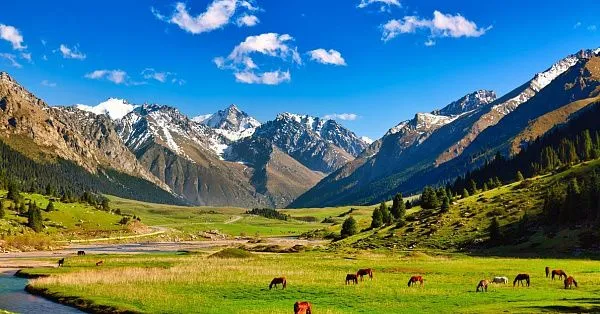
 Tourism30.08.26Kyrgyzstan becomes world’s best destination for solo adventure travel in 2026
 -
![]()

 Tourism28.08.26Foreign tourist arrivals to Russia rise by 20% in first half of 2026
 -
![]()
 Tourism27.08.26Zimbabwe turns to sport as catalyst for tourism growth in Masvingo
 -
![]()
 Tourism15.08.26Vietnam accelerates smart tourism with AI and digital services
 -
![]()
 Tourism13.08.26Egypt welcomes Russia's decision to launch direct flights to Borg El Arab and El Alamein
 -
![]()
 Tourism12.08.26Ghana records growth in tourism as international arrivals exceed 1.3 million



















-
![Vladimir Putin]()
 Vladimir PutinPresident of Russia"We are developing mutual trade, which is growing; it increased by over 12 per cent last year. We have a joint commission working in this sphere. Our focus is on agriculture, shipbuilding, information technology and energy, including nuclear power. We have signed a free trade agreement between the Eurasian Economic Union and Indonesia. Jakarta is our reliable and old friend within ASEAN. We are working together at all international platforms, including the UN"
 -
![Vladimir Putin]() Vladimir PutinPresident of Russia"More and more Iranian students are choosing Russian education. We are very pleased about this. A great many future doctors are studying in Russia. In the 2025–2026 academic year, the number of Iranian students in Russia approached 10,000, with 802 of them studying at the expense of the Russian state budget"
Vladimir PutinPresident of Russia"More and more Iranian students are choosing Russian education. We are very pleased about this. A great many future doctors are studying in Russia. In the 2025–2026 academic year, the number of Iranian students in Russia approached 10,000, with 802 of them studying at the expense of the Russian state budget" -
![Xi Jinping]() Xi JinpingPresident of the People’s Republic of China"The foundation of our bilateral relations will only grow stronger, and we will confidently move forward to a better future. […] The striving of nations on our planet for peace, development, cooperation and mutual benefit remains unchanged. The vital mission of the Shanghai Cooperation Organisation is to maintain stability and promote the development of our region"
Xi JinpingPresident of the People’s Republic of China"The foundation of our bilateral relations will only grow stronger, and we will confidently move forward to a better future. […] The striving of nations on our planet for peace, development, cooperation and mutual benefit remains unchanged. The vital mission of the Shanghai Cooperation Organisation is to maintain stability and promote the development of our region" -
![Alisher Salomov]() Alisher SalomovAdviser to the Chairman of the National Committee for Ecology and Climate Change of the Republic of Uzbekistan"First and foremost, I would like to highlight the importance of this Central Asia–Russia initiative, because environmental problems know no borders, and only a shared understanding of these problems and the search for joint solutions can deliver positive results"
Alisher SalomovAdviser to the Chairman of the National Committee for Ecology and Climate Change of the Republic of Uzbekistan"First and foremost, I would like to highlight the importance of this Central Asia–Russia initiative, because environmental problems know no borders, and only a shared understanding of these problems and the search for joint solutions can deliver positive results" -
![Joao Paulo Capobianco]() Joao Paulo CapobiancoBrazilian Minister of the Environment and Climate Change"The BRICS countries have a very high level of responsibility because they share an important part of the world's biodiversity, landscapes, populations, food production and water resources. So, we have an opportunity to lead by example. We have our development bank, which can demonstrate and develop new ways of financing programmes. We can reduce the risks for private capital to invest in restoration and efforts to combat desertification"
Joao Paulo CapobiancoBrazilian Minister of the Environment and Climate Change"The BRICS countries have a very high level of responsibility because they share an important part of the world's biodiversity, landscapes, populations, food production and water resources. So, we have an opportunity to lead by example. We have our development bank, which can demonstrate and develop new ways of financing programmes. We can reduce the risks for private capital to invest in restoration and efforts to combat desertification"