
















Chinese scientists develop lunar brick-making machine for future moon bases
They used an innovative system that harnesses concentrated solar energy

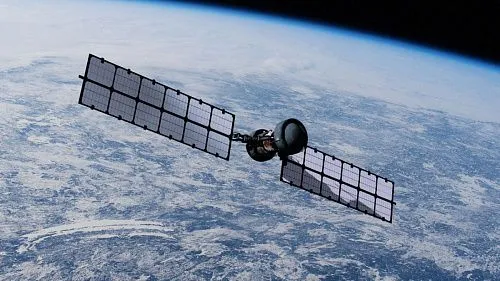
A Chinese research team has unveiled a pioneering "lunar brick-making machine" capable of producing bricks directly from moon soil. This is reported by Xinhua News Agency, a partner of TV BRICS.
Developed by the Deep Space Exploration Laboratory in Hefei, this innovative system harnesses concentrated solar energy, focused by a parabolic reflector and transmitted through fibre optics, to melt lunar soil at temperatures exceeding 1,300°C. The result is dense, high-strength bricks created without any additives, making them suitable for use in buildings, equipment platforms, and roads on the moon.
Over a two-year development period, the team tackled numerous technical challenges, including energy transmission and soil variability. Because lunar soil composition differs across regions, the researchers created multiple simulated soil samples to ensure adaptability.
Despite the machine’s success, experts acknowledge that lunar bricks alone are not enough to support full-scale habitation due to the moon's harsh environment, such as low gravity and vacuum conditions. The bricks will serve as protective outer layers in conjunction with other components like rigid structural modules and inflatable shells.
Further advancements are underway to integrate this technology into a complete lunar construction system, which includes automated assembly and validation processes suited for lunar surface conditions.
Photo: Helen_Field / iStock
-
![]()

 Technology08.09.26Expert: India can drive BRICS cooperation in energy, space, and digital technologies
 -
![]()
 Technology08.09.26Dubai airports launch mobile passport control
 -
![]()
 Technology07.09.26Iran develops AI system to detect pistachios suspected of aflatoxin contamination
 -
![]() Technology07.09.26BRICS countries strengthen technological sovereignty through cooperation
Technology07.09.26BRICS countries strengthen technological sovereignty through cooperation -
![]()
 Technology07.09.26China tests space rocket booster, opening new chapter in spaceflight
 -
![]()
 Technology05.09.26Thailand launches programme to expand public access to AI tools




















-
![Vladimir Putin]()
 Vladimir PutinPresident of Russia"We are developing mutual trade, which is growing; it increased by over 12 per cent last year. We have a joint commission working in this sphere. Our focus is on agriculture, shipbuilding, information technology and energy, including nuclear power. We have signed a free trade agreement between the Eurasian Economic Union and Indonesia. Jakarta is our reliable and old friend within ASEAN. We are working together at all international platforms, including the UN"
 -
![Vladimir Putin]() Vladimir PutinPresident of Russia"More and more Iranian students are choosing Russian education. We are very pleased about this. A great many future doctors are studying in Russia. In the 2025–2026 academic year, the number of Iranian students in Russia approached 10,000, with 802 of them studying at the expense of the Russian state budget"
Vladimir PutinPresident of Russia"More and more Iranian students are choosing Russian education. We are very pleased about this. A great many future doctors are studying in Russia. In the 2025–2026 academic year, the number of Iranian students in Russia approached 10,000, with 802 of them studying at the expense of the Russian state budget" -
![Xi Jinping]() Xi JinpingPresident of the People’s Republic of China"The foundation of our bilateral relations will only grow stronger, and we will confidently move forward to a better future. […] The striving of nations on our planet for peace, development, cooperation and mutual benefit remains unchanged. The vital mission of the Shanghai Cooperation Organisation is to maintain stability and promote the development of our region"
Xi JinpingPresident of the People’s Republic of China"The foundation of our bilateral relations will only grow stronger, and we will confidently move forward to a better future. […] The striving of nations on our planet for peace, development, cooperation and mutual benefit remains unchanged. The vital mission of the Shanghai Cooperation Organisation is to maintain stability and promote the development of our region" -
![Alisher Salomov]() Alisher SalomovAdviser to the Chairman of the National Committee for Ecology and Climate Change of the Republic of Uzbekistan"First and foremost, I would like to highlight the importance of this Central Asia–Russia initiative, because environmental problems know no borders, and only a shared understanding of these problems and the search for joint solutions can deliver positive results"
Alisher SalomovAdviser to the Chairman of the National Committee for Ecology and Climate Change of the Republic of Uzbekistan"First and foremost, I would like to highlight the importance of this Central Asia–Russia initiative, because environmental problems know no borders, and only a shared understanding of these problems and the search for joint solutions can deliver positive results" -
![Joao Paulo Capobianco]() Joao Paulo CapobiancoBrazilian Minister of the Environment and Climate Change"The BRICS countries have a very high level of responsibility because they share an important part of the world's biodiversity, landscapes, populations, food production and water resources. So, we have an opportunity to lead by example. We have our development bank, which can demonstrate and develop new ways of financing programmes. We can reduce the risks for private capital to invest in restoration and efforts to combat desertification"
Joao Paulo CapobiancoBrazilian Minister of the Environment and Climate Change"The BRICS countries have a very high level of responsibility because they share an important part of the world's biodiversity, landscapes, populations, food production and water resources. So, we have an opportunity to lead by example. We have our development bank, which can demonstrate and develop new ways of financing programmes. We can reduce the risks for private capital to invest in restoration and efforts to combat desertification"