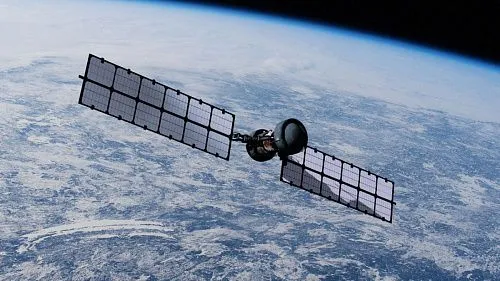

















Chinese researchers create innovative synthetic bacteria to clean high-salinity industrial wastewater
The research team constructed a modular strain capable of degrading multiple pollutants in parallel

Chinese scientists have developed an innovative synthetic bacteria strain capable of simultaneously degrading five persistent organic pollutants commonly found in high-salinity industrial wastewater. This is reported by CGTN, a partner of TV BRICS.
The research was led by a team from the Shenzhen Institutes of Advanced Technology (SIAT) at the Chinese Academy of Sciences. The scientists designed a novel bacterial strain equipped with five engineered metabolic pathways that allow it to break down a complex mix of hazardous aromatic pollutants, including biphenyl, phenol, naphthalene, dibenzofuran, and toluene.
High-salinity wastewater, often produced by chemical manufacturing and oil and gas operations, poses an environmental threat due to its combination of organic pollutants, heavy metals, and toxic substances. Natural microbial solutions have been unable to address such mixtures effectively, as most bacteria can only target a limited range of contaminants.
To overcome this, the Chinese research team constructed a modular strain capable of degrading multiple pollutants in parallel. Laboratory trials showed that within 48 hours, the engineered bacterium achieved over 60 per cent removal across all five target compounds, including full degradation of biphenyl and nearly 90 per cent efficiency in breaking down toluene and dibenzofuran.
According to the research team, the breakthrough opens new pathways for large-scale environmental remediation. The bacteria’s potential applications include industrial wastewater treatment, oil spill response, and possibly even the future biodegradation of microplastics.
Photo: iStock
-
![]()

 Technology09.09.26INOTEX 2026 connects 10 countries through technology, investment and startup cooperation
 -
![]()
 Technology09.09.26Russian scientists develop equipment for quickly detecting defective parts in manufacturing
 -
![]()
 Technology09.09.26Ethiopia creates globally competitive opportunities in artificial intelligence
 -
![]()

 Technology08.09.26Expert: India can drive BRICS cooperation in energy, space, and digital technologies
 -
![]()
 Technology08.09.26Dubai airports launch mobile passport control
 -
![]() Technology07.09.26Iran develops AI system to detect pistachios suspected of aflatoxin contamination
Technology07.09.26Iran develops AI system to detect pistachios suspected of aflatoxin contamination

















-
![Vladimir Putin]()
 Vladimir PutinPresident of Russia"We are developing mutual trade, which is growing; it increased by over 12 per cent last year. We have a joint commission working in this sphere. Our focus is on agriculture, shipbuilding, information technology and energy, including nuclear power. We have signed a free trade agreement between the Eurasian Economic Union and Indonesia. Jakarta is our reliable and old friend within ASEAN. We are working together at all international platforms, including the UN"
 -
![Vladimir Putin]() Vladimir PutinPresident of Russia"More and more Iranian students are choosing Russian education. We are very pleased about this. A great many future doctors are studying in Russia. In the 2025–2026 academic year, the number of Iranian students in Russia approached 10,000, with 802 of them studying at the expense of the Russian state budget"
Vladimir PutinPresident of Russia"More and more Iranian students are choosing Russian education. We are very pleased about this. A great many future doctors are studying in Russia. In the 2025–2026 academic year, the number of Iranian students in Russia approached 10,000, with 802 of them studying at the expense of the Russian state budget" -
![Xi Jinping]() Xi JinpingPresident of the People’s Republic of China"The foundation of our bilateral relations will only grow stronger, and we will confidently move forward to a better future. […] The striving of nations on our planet for peace, development, cooperation and mutual benefit remains unchanged. The vital mission of the Shanghai Cooperation Organisation is to maintain stability and promote the development of our region"
Xi JinpingPresident of the People’s Republic of China"The foundation of our bilateral relations will only grow stronger, and we will confidently move forward to a better future. […] The striving of nations on our planet for peace, development, cooperation and mutual benefit remains unchanged. The vital mission of the Shanghai Cooperation Organisation is to maintain stability and promote the development of our region" -
![Alisher Salomov]() Alisher SalomovAdviser to the Chairman of the National Committee for Ecology and Climate Change of the Republic of Uzbekistan"First and foremost, I would like to highlight the importance of this Central Asia–Russia initiative, because environmental problems know no borders, and only a shared understanding of these problems and the search for joint solutions can deliver positive results"
Alisher SalomovAdviser to the Chairman of the National Committee for Ecology and Climate Change of the Republic of Uzbekistan"First and foremost, I would like to highlight the importance of this Central Asia–Russia initiative, because environmental problems know no borders, and only a shared understanding of these problems and the search for joint solutions can deliver positive results" -
![Joao Paulo Capobianco]() Joao Paulo CapobiancoBrazilian Minister of the Environment and Climate Change"The BRICS countries have a very high level of responsibility because they share an important part of the world's biodiversity, landscapes, populations, food production and water resources. So, we have an opportunity to lead by example. We have our development bank, which can demonstrate and develop new ways of financing programmes. We can reduce the risks for private capital to invest in restoration and efforts to combat desertification"
Joao Paulo CapobiancoBrazilian Minister of the Environment and Climate Change"The BRICS countries have a very high level of responsibility because they share an important part of the world's biodiversity, landscapes, populations, food production and water resources. So, we have an opportunity to lead by example. We have our development bank, which can demonstrate and develop new ways of financing programmes. We can reduce the risks for private capital to invest in restoration and efforts to combat desertification"