















Indian chemicals market is expected to exceed US$1 trillion by 2040
The country has also presented examples of initiatives to achieve "zero" emissions

The Indian chemical industry is aiming for global leadership in the sector. This strategic shift emphasises the drive towards innovation, artificial intelligence (AI) and sustainability. The market is expected to exceed US$1 trillion by 2040. This is reported by IANS, a partner of TV BRICS.
This issue was the key theme of the 18th annual India Chemical Industry Outlook conference. The event was held under the theme "Engineering the Future: Reinventing the India Chemicals Sector for Enhanced Resilience".
As part of the conference, an analytical report was launched on enhancing sustainability and achieving global leadership. It emphasises the potential for high growth and sustainability of the Indian chemical industry in a new era for the global chemical industry.
Experts said that growing domestic consumption, changing supply chains and competitive prices are creating a favourable ground for significant growth in the sector. The importance of government support and technological advancement for further development was also emphasised.
The conference also touched on digital transformation, AI integration and sustainability innovation. Experts presented examples of zero emission initiatives including carbon capture, process automation, and use of sustainable raw materials.
Photo: iStock-
![]()

 Economy09.09.26Maksim Oreshkin, Deputy Chief of Staff of Russian Presidential Executive Office: Russia sees BRICS as future of global economy
 -
![]()

 Economy09.09.26South Africa to help BRICS strengthen economic development agenda
 -
![]()

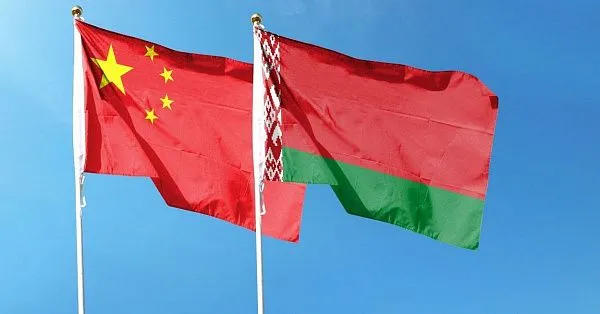
 Economy09.09.26Belarus and China increase stock exchange trading volumes
 -
![]()
 Economy09.09.26Tehran enters list of world's top 100 innovation clusters
 -
![]()
 Economy09.09.26Expert: BRICS should turn cooperation into practical opportunities for partner countries
 -
![]()

 Economy09.09.26Tunisia and Egypt intend to increase trade volumes and explore opportunities for joint investment


















-
![Vladimir Putin]()
 Vladimir PutinPresident of Russia"We are developing mutual trade, which is growing; it increased by over 12 per cent last year. We have a joint commission working in this sphere. Our focus is on agriculture, shipbuilding, information technology and energy, including nuclear power. We have signed a free trade agreement between the Eurasian Economic Union and Indonesia. Jakarta is our reliable and old friend within ASEAN. We are working together at all international platforms, including the UN"
 -
![Vladimir Putin]() Vladimir PutinPresident of Russia"More and more Iranian students are choosing Russian education. We are very pleased about this. A great many future doctors are studying in Russia. In the 2025–2026 academic year, the number of Iranian students in Russia approached 10,000, with 802 of them studying at the expense of the Russian state budget"
Vladimir PutinPresident of Russia"More and more Iranian students are choosing Russian education. We are very pleased about this. A great many future doctors are studying in Russia. In the 2025–2026 academic year, the number of Iranian students in Russia approached 10,000, with 802 of them studying at the expense of the Russian state budget" -
![Xi Jinping]() Xi JinpingPresident of the People’s Republic of China"The foundation of our bilateral relations will only grow stronger, and we will confidently move forward to a better future. […] The striving of nations on our planet for peace, development, cooperation and mutual benefit remains unchanged. The vital mission of the Shanghai Cooperation Organisation is to maintain stability and promote the development of our region"
Xi JinpingPresident of the People’s Republic of China"The foundation of our bilateral relations will only grow stronger, and we will confidently move forward to a better future. […] The striving of nations on our planet for peace, development, cooperation and mutual benefit remains unchanged. The vital mission of the Shanghai Cooperation Organisation is to maintain stability and promote the development of our region" -
![Alisher Salomov]() Alisher SalomovAdviser to the Chairman of the National Committee for Ecology and Climate Change of the Republic of Uzbekistan"First and foremost, I would like to highlight the importance of this Central Asia–Russia initiative, because environmental problems know no borders, and only a shared understanding of these problems and the search for joint solutions can deliver positive results"
Alisher SalomovAdviser to the Chairman of the National Committee for Ecology and Climate Change of the Republic of Uzbekistan"First and foremost, I would like to highlight the importance of this Central Asia–Russia initiative, because environmental problems know no borders, and only a shared understanding of these problems and the search for joint solutions can deliver positive results" -
![Joao Paulo Capobianco]() Joao Paulo CapobiancoBrazilian Minister of the Environment and Climate Change"The BRICS countries have a very high level of responsibility because they share an important part of the world's biodiversity, landscapes, populations, food production and water resources. So, we have an opportunity to lead by example. We have our development bank, which can demonstrate and develop new ways of financing programmes. We can reduce the risks for private capital to invest in restoration and efforts to combat desertification"
Joao Paulo CapobiancoBrazilian Minister of the Environment and Climate Change"The BRICS countries have a very high level of responsibility because they share an important part of the world's biodiversity, landscapes, populations, food production and water resources. So, we have an opportunity to lead by example. We have our development bank, which can demonstrate and develop new ways of financing programmes. We can reduce the risks for private capital to invest in restoration and efforts to combat desertification"