
















Iranian high-tech companies supply 40% of Russia’s DCS technology needs
This figure is expected to rise significantly, potentially exceeding US$6–7 million per year

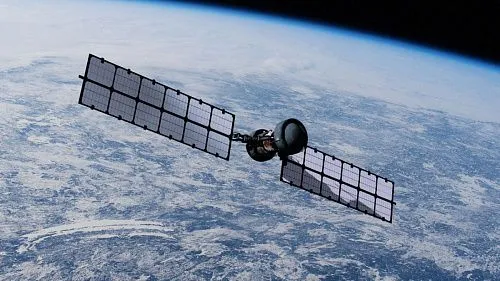
Iranian high-tech firms are playing a crucial role in Russia’s industrial sector, supplying 40 per cent of the country’s demand for Distributed Control Systems (DCS), as reported by Pars Today, a partner of TV BRICS.
DCS, advanced automation systems, are essential for managing complex processes in power plants, petrochemical facilities, and water management industries.
These systems provide a fully digital architecture, enabling seamless communication between human operators, industrial processes, and production facilities. This integration enhances operational efficiency while minimising process disruptions.
Since 2013, Iranian companies have been developing and deploying DCS technology, with installations at major Iranian refineries and petrochemical plants.
The demand for Iranian DCS technology is particularly strong in Russia’s oil and gas sector, contributing approximately US$1 million in annual revenue. However, as Iranian firms secure additional regulatory approvals, this figure is expected to rise significantly, potentially exceeding US$6–7 million per year, experts believe.
Photo: iStock
-
![]()

 Technology09.09.26INOTEX 2026 connects 10 countries through technology, investment and startup cooperation
 -
![]()
 Technology09.09.26Russian scientists develop equipment for quickly detecting defective parts in manufacturing
 -
![]()
 Technology09.09.26Ethiopia creates globally competitive opportunities in artificial intelligence
 -
![]()

 Technology08.09.26Expert: India can drive BRICS cooperation in energy, space, and digital technologies
 -
![]()
 Technology08.09.26Dubai airports launch mobile passport control
 -
![]() Technology07.09.26Iran develops AI system to detect pistachios suspected of aflatoxin contamination
Technology07.09.26Iran develops AI system to detect pistachios suspected of aflatoxin contamination















-
![Vladimir Putin]()
 Vladimir PutinPresident of Russia"We are developing mutual trade, which is growing; it increased by over 12 per cent last year. We have a joint commission working in this sphere. Our focus is on agriculture, shipbuilding, information technology and energy, including nuclear power. We have signed a free trade agreement between the Eurasian Economic Union and Indonesia. Jakarta is our reliable and old friend within ASEAN. We are working together at all international platforms, including the UN"
 -
![Vladimir Putin]() Vladimir PutinPresident of Russia"More and more Iranian students are choosing Russian education. We are very pleased about this. A great many future doctors are studying in Russia. In the 2025–2026 academic year, the number of Iranian students in Russia approached 10,000, with 802 of them studying at the expense of the Russian state budget"
Vladimir PutinPresident of Russia"More and more Iranian students are choosing Russian education. We are very pleased about this. A great many future doctors are studying in Russia. In the 2025–2026 academic year, the number of Iranian students in Russia approached 10,000, with 802 of them studying at the expense of the Russian state budget" -
![Xi Jinping]() Xi JinpingPresident of the People’s Republic of China"The foundation of our bilateral relations will only grow stronger, and we will confidently move forward to a better future. […] The striving of nations on our planet for peace, development, cooperation and mutual benefit remains unchanged. The vital mission of the Shanghai Cooperation Organisation is to maintain stability and promote the development of our region"
Xi JinpingPresident of the People’s Republic of China"The foundation of our bilateral relations will only grow stronger, and we will confidently move forward to a better future. […] The striving of nations on our planet for peace, development, cooperation and mutual benefit remains unchanged. The vital mission of the Shanghai Cooperation Organisation is to maintain stability and promote the development of our region" -
![Alisher Salomov]() Alisher SalomovAdviser to the Chairman of the National Committee for Ecology and Climate Change of the Republic of Uzbekistan"First and foremost, I would like to highlight the importance of this Central Asia–Russia initiative, because environmental problems know no borders, and only a shared understanding of these problems and the search for joint solutions can deliver positive results"
Alisher SalomovAdviser to the Chairman of the National Committee for Ecology and Climate Change of the Republic of Uzbekistan"First and foremost, I would like to highlight the importance of this Central Asia–Russia initiative, because environmental problems know no borders, and only a shared understanding of these problems and the search for joint solutions can deliver positive results" -
![Joao Paulo Capobianco]() Joao Paulo CapobiancoBrazilian Minister of the Environment and Climate Change"The BRICS countries have a very high level of responsibility because they share an important part of the world's biodiversity, landscapes, populations, food production and water resources. So, we have an opportunity to lead by example. We have our development bank, which can demonstrate and develop new ways of financing programmes. We can reduce the risks for private capital to invest in restoration and efforts to combat desertification"
Joao Paulo CapobiancoBrazilian Minister of the Environment and Climate Change"The BRICS countries have a very high level of responsibility because they share an important part of the world's biodiversity, landscapes, populations, food production and water resources. So, we have an opportunity to lead by example. We have our development bank, which can demonstrate and develop new ways of financing programmes. We can reduce the risks for private capital to invest in restoration and efforts to combat desertification"